

We've shipped production sites on both Gatsby and Astro. This isn't a framework fanboy post, it's a practical comparison for developers and teams evaluating their options in 2026.
The landscape has changed significantly since Gatsby's peak in 2019-2021. Here's where things actually stand.
The State of Both Frameworks in 2026
Gatsby
Gatsby was the dominant static site generator from roughly 2018-2021. It pioneered the concept of pulling data from any source via GraphQL and generating optimized static pages at build time. Gatsby Cloud provided a hosted build and deploy pipeline. Netlify acquired Gatsby in February 2023.
Since the acquisition, Gatsby's development has slowed significantly. The GitHub repository sees minimal activity compared to its peak. Gatsby Cloud was shut down. The core team has largely moved on. The framework still works, and existing sites continue to run, but the ecosystem is contracting, plugins are going unmaintained, community support is thinning, and fewer new projects choose Gatsby.
Astro
Astro launched its 1.0 in August 2022 and has been on a steep growth curve since. It takes a fundamentally different approach: ship zero JavaScript by default, support any UI framework (React, Svelte, Vue, Solid) within the same project, and generate static HTML at build time. Content Collections provide type-safe content management. Server-side rendering and hybrid rendering were added in later versions.
The ecosystem is active and growing. The core team ships regular releases. The community is large and engaged. In 2026, Astro is the default recommendation for most content-focused static sites.
Performance
Astro wins this comparison decisively. The core architectural difference is JavaScript: Gatsby ships React to the browser for every page, even pages that don't need interactivity. Astro ships zero JavaScript by default.
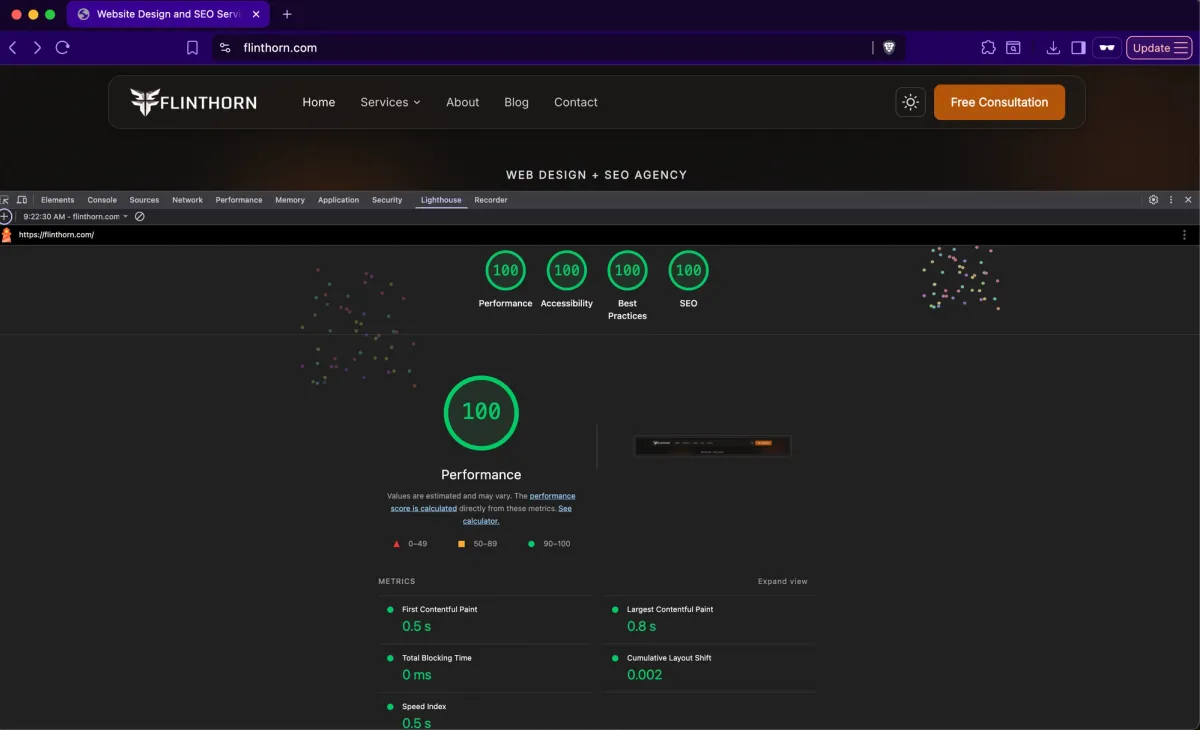
A typical Gatsby page loads 200-400KB of JavaScript (React runtime, Gatsby runtime, page data JSON). A typical Astro page loads 0-10KB of JavaScript. This difference shows up directly in Lighthouse Performance scores, Core Web Vitals, and real-world page load times.
Gatsby tried to mitigate this with code splitting, prefetching, and partial hydration experiments, but the React runtime floor is unavoidable. Astro's "islands architecture" only hydrates the specific components that need interactivity, everything else is static HTML with zero JavaScript cost.
For a marketing site, blog, or documentation site, Astro will consistently outperform Gatsby on every performance metric.
Developer Experience
Gatsby's developer experience was innovative when it launched, hot reloading, GraphQL data layer, rich plugin ecosystem. But the GraphQL data layer became a pain point for many developers. Simple tasks like querying a list of blog posts required understanding GraphQL schema customization, node creation, and Gatsby's specific data pipeline.
Astro's developer experience is simpler. Content Collections give you type-safe access to local content. Data fetching uses standard fetch() or any npm package, no GraphQL layer to learn. Components use a JSX-like syntax that's immediately familiar. Framework components (React, Svelte, Vue) can be dropped in where needed.
Build times are another significant difference. Gatsby builds became notoriously slow as sites grew, a 500-page site could take 5-10 minutes to build. Astro builds the same site in under a minute. For developer iteration speed and CI/CD costs, this matters.
Content Management
Both frameworks are headless, they connect to external CMS platforms rather than providing their own content management. Gatsby works with Contentful, Sanity, WordPress (headless), and others through source plugins. Astro works with the same CMS platforms through direct API calls or community integrations.
Gatsby's source plugin approach was powerful but opaque. Data from your CMS was transformed through Gatsby's GraphQL layer, which added a layer of abstraction between your content and your templates. When things worked, it was elegant. When things broke, debugging required understanding Gatsby's internal data pipeline.
Astro's approach is more direct. You fetch data from your CMS using its SDK or API, and use it in your templates. There's less magic and less abstraction. For local content (markdown, MDX), Astro's Content Collections provide type safety and validation that Gatsby's approach lacked.
Ecosystem Health
This is the most important factor for long-term decision making, and it's where Gatsby's position is weakest.
Gatsby's plugin ecosystem was its biggest strength. But plugins require maintenance. API changes, security patches, compatibility updates. With the core team reduced and community momentum gone, many Gatsby plugins are now unmaintained. The npm registry shows download trends declining steadily since 2022.
Astro's ecosystem is younger but actively growing. The integration system is simpler than Gatsby's plugin architecture, and the community is producing new integrations regularly. The Astro team ships regular releases with meaningful improvements.
Choosing a framework with a contracting ecosystem means increasing maintenance burden over time, you'll encounter unmaintained dependencies, unanswered issues, and declining community support. This is the single strongest argument for Astro over Gatsby in 2026.
When to Choose Astro for New Projects
You're building a content-focused site, marketing, blog, documentation, portfolio
Performance and Core Web Vitals scores matter for your SEO strategy
You want minimal JavaScript shipped to the browser
You want to use components from different frameworks (React, Svelte, Vue) in the same project
You want fast build times that won't slow down your CI/CD pipeline
You want a framework with an active, growing ecosystem and long-term viability
When Gatsby Still Makes Sense
You have an existing Gatsby site that's working well and doesn't need a rebuild
Your team has deep Gatsby expertise and the site doesn't need significant new development
You're using Gatsby-specific features (certain source plugins, Gatsby Functions) that would be costly to replicate
The site is stable, low-traffic, and doesn't justify the cost of a migration
Should You Migrate an Existing Gatsby Site to Astro?
It depends on your situation. If your Gatsby site is stable, performing well, and doesn't need significant new development, there's no urgent reason to migrate. It will continue to work.
But if you're experiencing slow builds, encountering unmaintained plugin issues, struggling with performance, or planning significant new features, a migration to Astro is worth serious consideration. The longer you wait, the more the Gatsby ecosystem contracts, and the harder maintenance becomes.
Migration complexity depends on the size and complexity of your site. A straightforward blog or marketing site can be migrated in days. A complex site with many custom Gatsby plugins and data transformations will take longer.
We help teams evaluate and execute framework migrations. Learn about our CMS and platform support services.
Want to discuss whether a migration makes sense for your project? Get in touch for a free consultation.